
Cars Arena: Fast Race 3D
CASUAL AZUR GAMESRacing
4.65.89K Reviews
- Version
- 2.57.1
- Installs
- 50.00M
- Age Rating
- Everyone
Screenshots
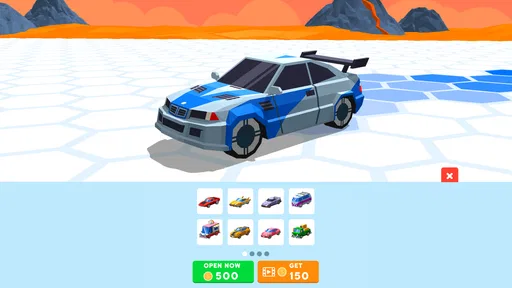
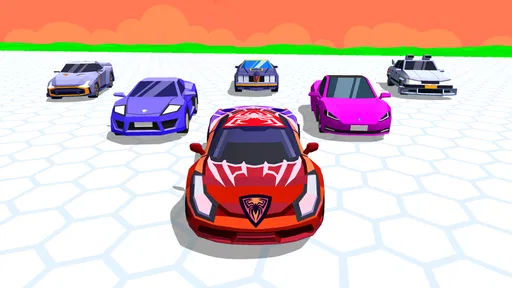
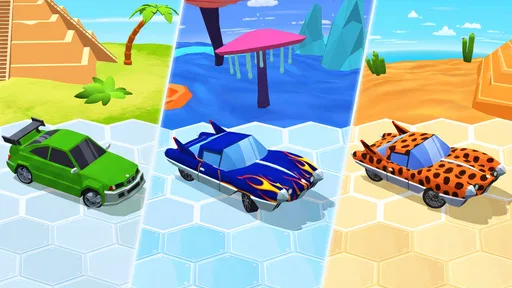
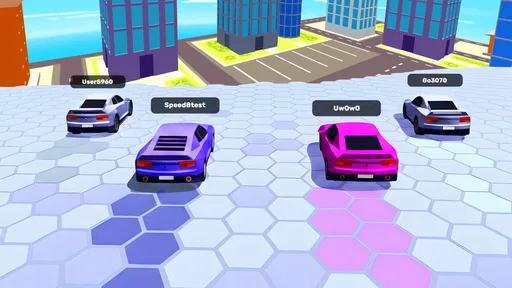
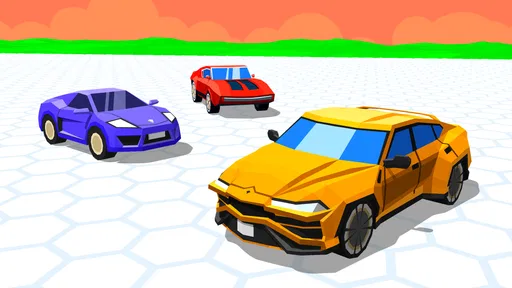
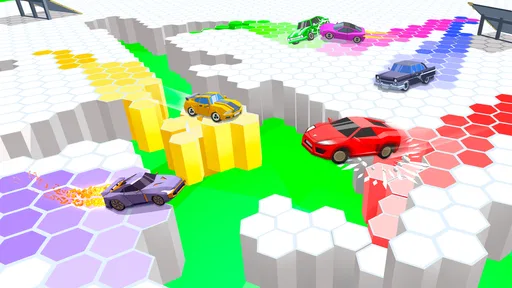
Our Review of Cars Arena: Fast Race 3D
 Analysis by Appyee
My first few minutes with Cars Arena: Fast Race 3D were immediately easy to understand: I was placed in a compact 3D arena, surrounded by moving cars, and encouraged to keep driving while looking for chances to drift, jump, and damage opponents. That clarity is one of the game’s biggest strengths. I did not need a long tutorial or a complicated racing background to start making decisions. The action is built around short bursts of attention, where positioning matters almost as much as speed.
This is a free racing game from CASUAL AZUR GAMES, aimed at players who want quick arena action rather than a detailed driving simulator. It has reached over 50 million installs and holds a 4.6 average from around 178 thousand ratings, which gives a useful picture of its broad appeal. My own impression is that it works best when I treat each round as a compact challenge: stay mobile, avoid becoming an easy target, and use the arena’s shape to create better opportunities.
The presentation does not try to imitate a serious motorsport broadcast. Instead, it creates a bright, direct, game-like mood where cars, ramps, collisions, and movement are always the focus. That choice suits the format. I can open it when I have only a few minutes, understand the objective quickly, and get straight into the central loop without first adjusting a large collection of racing settings.
How the arena turns simple racing into a readable spectacle
I find the arena’s clearest strength is how quickly it lets me read a developing situation: I can spot nearby cars, judge open space, and decide whether to change course without treating every turn like a technical driving test. That makes its collisions and jumps feel like choices rather than visual noise. Next, I’ll look at how the game’s presentation supports that readability when traffic gets crowded.
A visual language built around motion
The art direction is functional in a good way. The arena is designed to make movement readable, so I can concentrate on where vehicles are going instead of trying to interpret a cluttered scene. Cars stand out as the important objects, while jumps and open driving lines help create a sense of vertical and horizontal movement. The result feels more like an interactive stunt playground than a traditional circuit.
That distinction matters. In a normal lap-based racer, I usually focus on braking points, corner entry, and maintaining an ideal racing line. Here, the useful line changes constantly because other cars are active hazards and opportunities. A route that looks safe for a moment can become dangerous when another vehicle cuts across it. I found myself scanning the arena in short glances, checking escape space before committing to a turn or jump.
The setting also supports the game’s tone. There is no need for a detailed fictional city or a realistic championship atmosphere because the arena itself is the stage. Its purpose is to keep the action concentrated. I am not driving toward a distant landscape; I am negotiating a contained space where every turn can bring me close to another car. That compact design helps the game feel energetic even when a round is not going perfectly.
One useful habit is to stop thinking of ramps as automatic shortcuts. A jump can look attractive because it offers speed and spectacle, but it can also leave the car with fewer immediate options after landing. I get better results when I consider what will be around me at the other side. If several cars are converging, a lower and wider route may be safer than the most dramatic launch.
Why the simple look helps during crowded moments
During a busy section, visual simplicity becomes a practical advantage. When several vehicles are moving close together, I need to identify my own car, the nearest threat, and the direction of open space almost instantly. The game’s stylized presentation keeps that task manageable. It is not trying to fill the screen with realistic surface detail, and that leaves more attention for the decisions that actually affect a run.
I also like the way the arena frames collisions as part of the experience rather than as an embarrassing mistake. Contact is expected, so I do not feel that every bump has ruined a carefully simulated race. That makes the game more approachable than racing titles that punish a small error with a long recovery. At the same time, careless driving still has a cost: throwing the car into traffic without an exit plan can turn a promising run into a chaotic one.
Players looking for photorealistic cars, licensed tracks, or a serious motorsport identity should set their expectations differently. This is not competing with simulation-focused racers on realism. Its visual goal is readability and immediate excitement, and I think it succeeds more consistently when judged by those standards.
Small visual decisions that affect play
The most important visual detail is not decoration but spacing. Open sections give me room to build momentum, while tighter areas make every collision more likely. I learned to read the arena as a sequence of risk levels: wide space for repositioning, ramps for sudden changes in direction, and crowded approaches where patience can be more valuable than raw speed.
That leads to a less obvious strategy. I do not always want to be in front of every car immediately. Reaching a useful position with room to react can be better than forcing an early lead and becoming boxed in. The game’s visual setup makes this clear because the arena shows threats around me at a glance. I can choose to take a slightly longer path if it gives me a cleaner angle for the next move.
Sound as a guide to the game’s pace
The sound design supports the game’s arcade character by keeping the mood active rather than solemn. Engine noise, impacts, and the general sense of motion help make each encounter feel physical, even though the driving is intentionally accessible. I do not experience the arena as a quiet puzzle; I experience it as a place where movement should continue and hesitation can be dangerous.
What works best is the relationship between sound and rhythm. A jump or collision feels like a punctuation mark inside a short action sequence. I can accelerate, make contact, recover, and immediately look for the next opening. That rhythm prevents the game from feeling like a slow technical exercise. It also makes a failed attempt easier to accept because the round keeps moving instead of dwelling on the mistake.
I would not choose this game for a calm, atmospheric driving session. Its mood is more suitable for a quick break, especially when I want something that gives me an immediate objective. The audio and visual presentation point in the same direction: keep the car moving, react to what is nearby, and treat the arena as a constantly changing space.
How pacing changes the way I play
The pacing encourages short-term decisions instead of long strategic planning. I rarely have time to map out an entire run. Instead, I ask practical questions: Is there enough space to turn? Will this jump place me beside another car? Can I recover if I miss the ideal angle? Those questions are simple, but they keep the driving active and give the game more depth than its straightforward controls might suggest.
A realistic everyday use case is a short wait before an appointment or during a commute break. I can play a quick session without needing to remember a complicated setup from the previous day. The game is also suitable for someone who likes racing but does not want to learn manual gear changes, deep vehicle tuning, or long championship structures before having fun.
The trade-off is that this same immediacy may feel repetitive to players who need a strong sense of long-term progression in every session. If your favorite part of racing games is building a detailed garage, studying technical statistics, or completing extended championships, the arena format may feel too focused on the moment-to-moment encounter.
Where the mechanics fit the atmosphere
The core mechanics and presentation support each other well. Drifting gives movement a little style and helps the car change direction without turning the game into a technical simulator. Jumps add visual drama and create moments where the usual ground-level traffic is interrupted. Destruction and collisions make the other cars feel like active participants rather than simple markers to pass.
In my experience, the strongest runs come from combining these actions instead of treating them as separate tricks. A drift can set up a cleaner approach to a jump, while a jump can help avoid a crowded patch of traffic. Destructive contact is most useful when it creates space or prevents an opponent from controlling the route I want. Randomly performing stunts looks exciting, but purposeful movement is more reliable.
That is one of the game’s more valuable hidden lessons: speed alone is not always the answer. A car moving quickly in the wrong direction can become vulnerable. I get more control when I use the arena’s width, keep a recovery path visible, and avoid turning every encounter into a direct collision. The game remains accessible, but paying attention to angles and escape routes noticeably improves the experience.
Controls, accessibility, and the learning curve
The game is rated Everyone and supports devices running Android 7.0 or later, which makes it approachable for a wide range of mobile players. I appreciate that the concept can be understood without previous experience in racing games. A new player can begin with the basic goals—drive, avoid trouble, and use the arena—then gradually learn better timing through repeated attempts.
That accessibility does not mean every moment is effortless. The challenge comes from controlling momentum while the environment changes around me. A beginner may focus only on the car directly ahead, while a more experienced player watches the wider flow and anticipates where traffic will close in. The learning curve is therefore less about memorizing complicated controls and more about improving awareness.
One practical tip is to avoid making a sharp move simply because another car is nearby. Sudden steering can solve one problem while creating another, especially if it sends the car toward a wall, ramp edge, or second opponent. I found it more effective to make smaller corrections whenever there is enough room, saving stronger direction changes for moments when the current line is clearly unsafe.
Free access and the question of spending
The game is free to download, with optional in-app purchases ranging from $0.99 to $49.99 per item. That pricing range is important to keep in mind before installing, particularly for younger players using a shared device. The free entry point makes it easy to test the driving style without committing money first, but the presence of purchases means I would still check device purchasing controls if children are playing.
For me, the right approach is to judge the game on its immediate racing loop before considering any optional spending. If the arena driving itself is not enjoyable, purchases will not solve that problem. If the short, collision-heavy format does suit you, the free version provides a straightforward way to decide whether the extra options are worth your own budget.
This is also where Cars Arena differs from premium racing alternatives. A paid game may offer a more controlled experience with fewer monetization decisions, while a large free racing title may provide broader progression, licensed content, or more conventional circuit racing. This game’s advantage is its focused identity: it gets to arena action quickly and does not pretend to be a full racing simulator.
Who will enjoy it, and who should skip it
I would recommend it to players who enjoy arcade racing, quick restarts, physical contact, and compact environments where a good reaction can change the outcome. It is especially suitable for someone who wants a game that can be understood in one sitting but still rewards better positioning over time. The bright presentation and direct objectives also make it easier to share casually with friends who may not normally play racing games.
I would be more cautious about recommending it to players who dislike collisions, prefer peaceful driving, or want every race to be decided by clean cornering. The destruction-focused arena style is central, not an occasional side activity. It may also disappoint anyone expecting deep vehicle engineering or a realistic model of motorsport technique.
Compared with ordinary lap racers, the game gives me more reasons to watch the surrounding traffic and fewer reasons to memorize a perfect circuit. Compared with stunt-focused driving games, it keeps the attention on competing cars rather than making the jump itself the entire objective. That middle ground is its clearest identity, although it also means it will not fully replace either kind of alternative for a specialist player.
Version, longevity, and the right way to approach it
The current version is 2.57.1, and the game’s large install base suggests that it has found a substantial audience. I would still approach it as a session-based arcade game rather than expecting it to become my only racing title. Its appeal comes from the repeatable tension of entering an arena, reading the traffic, and trying to make a cleaner sequence of decisions than before.
To get more from it, I recommend setting a small personal goal for each session. One time I might focus on avoiding unnecessary collisions; another time I might practice using jumps without landing in crowded areas. This turns repeated races into deliberate practice instead of a string of similar attempts. It also makes the game feel less dependent on luck, because I can identify which part of my driving needs improvement.
Another useful workflow is to play one round aggressively and the next more patiently. The contrast quickly shows which risks are producing real advantages and which are simply creating noise. I found that a controlled run often gives me more opportunities to attack because I remain in a better position after each encounter. That is a subtle but meaningful difference from simply pressing forward whenever the route looks open.
The atmosphere verdict
Cars Arena: Fast Race 3D creates a coherent playable mood by aligning its art direction, sound, and pacing around immediate arena action. The visuals keep cars and routes readable, the audio reinforces movement and impact, and the mechanics give those sensations a purpose. I never felt that the presentation was trying to sell a serious racing fantasy that the controls could not support. Instead, it consistently presents itself as a lively mobile contest built around speed, stunts, and contact.
Its limitations are equally clear. The focused format may not satisfy players who want realistic handling, elaborate progression, or a quiet drive. Optional purchases also deserve attention, especially on family devices. Still, those concerns do not undermine the central experience when the intended audience is understood.
My final recommendation is simple: try it if you want a free, accessible racing game that turns a small 3D arena into a fast-moving tactical space. I enjoy it most when I stop chasing spectacle for its own sake and start using drifting, jumps, and collisions with a plan. The best part is not merely going fast; it is learning when movement, patience, and controlled aggression belong in the same run.
Verdict
Strengths of Cars Arena: Fast Race 3D
- Quick races are ideal for short gaming sessions.
- Simple controls make the game easy to pick up.
- Bright 3D visuals give tracks a lively appearance.
- Unlockable cars add a sense of progression.
- Offline play is useful when you have no connection.
Limitations of Cars Arena: Fast Race 3D
- Frequent ads can interrupt the racing experience.
- Car handling may feel too slippery for some players.
- Track variety can become repetitive after extended play.
- Progression may encourage grinding or optional purchases.
- Performance can vary on older phones.
Other Releases by CASUAL AZUR GAMES
View All
Worms Zone .io - Hungry Snake
Action4.3

Stack Ball - Crash Platforms
Arcade4.5

STAR: Super Tricky Amazing Run
Arcade4.2

State.io — Conquer the World
Strategy4.1
Similar Picks in This Category
View All
Hill Climb Racing
Fingersoft4.3

Dr. Driving
SUD Inc.4.2

Traffic Rider
skgames4.5

Asphalt 8 - Car Racing Game
Gameloft SE4.6

Race Master 3D: Car Racing
Beresnev Games4.6

Extreme Car Driving Simulator
AxesInMotion Racing4.3
Frequently Asked Questions
What is Cars Arena: Fast Race 3D, and how is it played?
Cars Arena: Fast Race 3D is an arcade racing game focused on quick matches, colorful tracks, and fast reactions rather than realistic driving simulation. You control a car across floating or obstacle-filled arenas, collect rewards, avoid falling or crashing, and try to finish ahead of other racers. Its simple controls make it easy to start, although mastering turns, shortcuts, and timing takes practice.
Does Cars Arena: Fast Race 3D work offline?
The game may allow some racing or practice content to be played without a constant internet connection, but online features can require access to the internet. Multiplayer matchmaking, advertisements, cloud-related functions, event updates, and certain rewards may not work correctly offline. If you plan to play while traveling, it is best to test the game after installation and expect that some content may remain unavailable without a connection.
Is Cars Arena: Fast Race 3D free to download and play?
Cars Arena: Fast Race 3D is generally offered as a free download, allowing players to begin racing without paying an upfront purchase price. However, free access may be supported by advertisements and optional in-app purchases. These purchases can sometimes provide cosmetic items, upgrades, currency, or convenience features. Review the store listing and payment settings carefully, especially if children will use the device.
What devices are compatible with Cars Arena: Fast Race 3D?
Compatibility depends on the version available for your Android or iOS device, as well as the operating system requirements set by the developer. The game is designed for touchscreen smartphones and tablets, but performance can vary considerably. Newer devices usually provide smoother animations and faster loading, while older or entry-level models may experience reduced frame rates, heat, or occasional crashes.
Does the game contain advertisements or require personal information?
Players should expect that Cars Arena: Fast Race 3D may display advertisements, particularly between races or when claiming optional bonuses. Some ads can be removed or reduced only through a purchase, depending on the version. The game may also request basic permissions or collect technical information for analytics, advertising, and performance improvement. Check the current privacy policy before accepting permissions.
Play our best games!


